HOME | DD
 Lediblock2 — DOD Bestiary: Colossus
#behemoth #colossus #planetofdinosaurs #thomastapir #retrosaur #kepler22b #euxenosaur #retrosauropod #daysofdikorus #postcycleearth
Published: 2018-11-29 21:43:16 +0000 UTC; Views: 3809; Favourites: 8; Downloads: 0
Redirect to original
Description
body div#devskin0 hr { }
Common Name: Colossus
Pronounced: (Cole-oss-iss)
Classification: Xenotitan brontocauda (Thunder-tail-alien-titan)
SGOC Rank: Xenofauna (euxenosaur)
Length: 1,700 feet
Height: 350 feet at the shoulder
Weight: 1,900 tons
Diet: Herbivore / Omnivore (See text)
Social Structure: Solitary, Herd (2-8 members)
Home Planet: Keppler-22b
Distribution: Southern/southeastern North America, South America, Africa
IUCN Status: Threatened
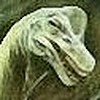
Towering over the mighty behemoths and dwarfing even most kaiju, the utterly enormous creature known as the colossus is by far the largest of the euxenosaurs, and indeed one of the single largest organisms to be found on all of post-Cycle Earth. Most closely related to the smaller-but-still-gargantuan behemoth, this enormous beast is equally comfortable both on land and in the water, constantly roaming in its endless search for the necessary sustenance to fuel its almost unimaginably huge bulk.
Like the behemoth, the colossus greatly resembles the depictions of sauropods seen in pre-Cycle science; an enormous lumbering titan of flesh and blood with an upright neck and a slow, plodding demeanor. However, it is still quite distinct from the mostly-aquatic living barges that are its cousins. The body of a colossus, while massive, is considerably slimmer and a bit more streamlined than that of a behemoth, and the legs are quite a bit more heavily muscled in order to better carry its weight on land; it’s also quite a bit more horizontally-aligned than either known species of behemoth, with a longer, more sinuous neck and a very long, thickly muscular tail extending behind it to serve as a counterbalance and as a powerful weapon to bring to bear against would-be predators; when moving on land, the euxenosaur tends to walk in a somewhat horizontal position more reminiscent of Earth sauropods. The head is slightly narrower than that of a behemoth as well, and the teeth are slightly larger and longer in proportion to the body; additionally, the eyes are angled more forwards to allow for keener binocular vision, and the nostrils are set on a slightly raised ridge in between the eyes. The skin is thick and leathery, without any of the loose folds or barbels seen in its more aquatic cousins, and while it does have a mesh of subdermal air sacs, these are more used to reduce weight than anything else; sexually mature individuals often have one or more rows of relatively small (But still boulder-sized) and slightly pointed bony nodules running down the spine, storing vital nutrients and serving as an indicator that the individual in question is ready to mate. The reptosilk nozzle is totally atrophied in the adults, but the juveniles can produce a small amount of the stuff.
The colossus is just as capable of surviving in water as it is on land, but it tends to prefer the latter environment in order to avoid competition with behemoths for the same food items. No plant or fungi is safe from the colossus’ appetite, from carpets of moss to the tallest trees to the most bizarre forms of xenoflora to groves of toxic mycos. To supplement its diet with protein and minerals, the euxenosaur will also strip colonies of molluscs from coastal rocks and scoop up entire sections of beach like a pelican to ingest whatever animal life may be living underground, sand and all. Like behemoths, they don’t chew, instead using the shredding teeth that line their throats to handle their food. Even smaller animals are not safe from the gigantic alien’s endless appetite; it’s been known to supplement its diet with protein in the form of any animal life that might be within the vegetation it eats or the occasional megafauna. Also like behemoths, colossi leave a huge amount of excrement behind wherever they go, fertilizing the devastated landscapes that they leave behind and providing enough nourishment for the vegetation to grow back as thick as it was before and then some.
These creatures are solitary for almost all their lives, only coming together when there’s a huge amount of food in one place or to mate, which is done quickly and unceremoniously with a ‘cloacal kiss’. The smart car-sized eggs are laid in the hundreds either on land or on the water in floating patches; like behemoths, prey swamping is utilized to ensure that at least some offspring will survive the feeding frenzy that quickly ensues as predators from all over the local area swarm the nesting site. Each newborn colossus is roughly the size of a horse and quite a bit more gracile than their parents; they often form small bands of up to a dozen or so and use numbers to deter predators and their powerful hind legs to quickly flee from ones that try their luck. The young euxenosaurs are also quite a bit more carnivorous than the adults, bulk-loading on arthropods, carrion, and smaller animals whenever they get the chance to help fuel their tremendous growth. Practically nothing can harm a fully-grown colossus, but the younger ones are the targets of many predators, from kapkrackers to kaiju.
Colossus flesh is highly valued by the Tylobans, particularly the flesh of the legs and the tails; humans and skrag find the meat quite palatable as well. The meat of juveniles is generally considered to be tenderer and more flavorful than meat from fully grown animals; the Tylobans and the skrag claim that the younger creatures’ more meat-heavy diet makes their flesh much more flavorful than that of the more herbivorous adults. Combined with the sheer size and strength of adult colossi, this means that the gargantuan creatures are very rarely hunted when fully-grown, while juveniles are targeted far more frequently. However, even half-grown animals are still very large SGOs; a large coordinated and well-equipped hunting party is needed to bring one down without excessive harm coming to the hunters.
Like all SGO-sized euxenosaurs, colossi have a reactor gland and are themselves mildly radioactive, and their flesh is considered safe for human consumption.
Related content
Comments: 9

Since I just read that the Colossus is only one of the largest organisms on post-Cycle Earth, what is THE #1 biggest that ever lived in your universe?
👍: 0 ⏩: 1

Estranthus is likely heavier, and the Pando Grove definitely outsizes the colossus.
👍: 0 ⏩: 1
Would you like to give me information about those giant beasts? Or did you already do that?
👍: 0 ⏩: 1
Go to Gilarah. He's the guy who owns the 'verse.
👍: 0 ⏩: 1
www.youtube.com/watch?v=79DijI…
👍: 0 ⏩: 1


I wonder if they are other predatory Sgos besides krapkackers
👍: 0 ⏩: 1