HOME | DD
 Wilkowen — Fiber Reinforced Plastic Armor Tutorial

Published: 2013-04-04 02:56:26 +0000 UTC; Views: 9831; Favourites: 111; Downloads: 37
Redirect to original
Description
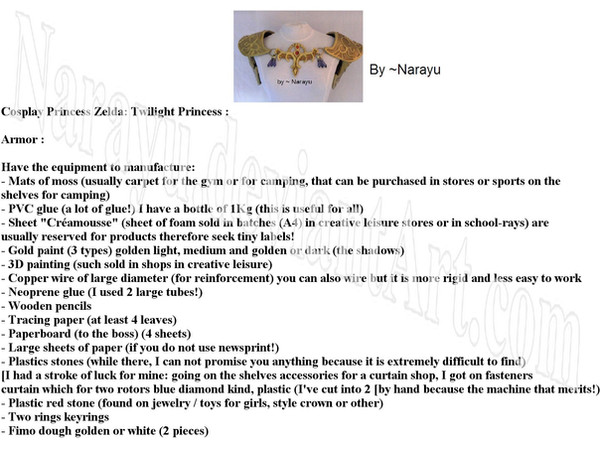
This is a simple tutorial illustrating my favorite technique for cosplay armor and props. The example shown here is an armor design from Twilight Princess, basic plate armor consisting of simple curves and raised design elements.Related content




Comments: 13

Really cool tutorial, thanks!
Also, That cat is precioussss
👍: 0 ⏩: 0


Interesting idea! I hadn't thought of using polyester resin with materials other than fiberglass.
One note, though - polyester resin and body filler should be used with a respirator, as they give off toxic vapors. You're probably fine once or twice, but using it for long periods of time or repeated exposure can cause neurological damage.
👍: 0 ⏩: 1

I think that a lot of the concern about using these chemicals at home comes from the misconception that the same exposure hazards found in industrial applications also apply to DIY projects. Even so, I will probably remove the statement that a respirator is not needed for this small project, and just let folks decide for themselves.
👍: 0 ⏩: 1
True - a lot of stuff depends on degree of exposure (ie, frequent for industrial uses, more variable for people doing DIY stuff - I know I didn't have what would qualify as 'proper ventilation' when I did resin work, though). In general it's probably better to err on the side of caution - and respirator filters are the only thing that'll block out how awful the resin smells *g*
👍: 0 ⏩: 0
I have used 72 and 72F (fusible) and both work well. If you look closely at the fusible, you will see that the adhesive is not a continuous layer, but lots of tiny dots. There is still space for the resin to work its way in.
👍: 0 ⏩: 0

Huh. I have a question. Would this work with fusible interfacing? I know that the fusibles already have resin fabricated into them, so not sure how that would affect the absorption of the fiberglass resin. I have an entire bolt of the stuff I'd love to requisition for fiberglassing, if it works.
👍: 0 ⏩: 1
I have used 72 and 72F (fusible) and both work well. If you look closely at the fusible, you will see that the adhesive is not a continuous layer, but lots of tiny dots. There is still space for the resin to work its way in.
👍: 0 ⏩: 1
Sweet! I've cut four layers' worth of the stuff to try out on Friday. Crossing my fingers and hope it works well. I'm running out of time.
👍: 0 ⏩: 1
Just thought I'd mention that if you are substituting interfacing for glass cloth to go over a separate base, you'd want the interfacing to be a similar weight as the cloth. 72 is heavy stuff that best serves as BOTH the base and the composite (such as in the above tutorial). Hope that makes sense.
👍: 0 ⏩: 1
Since I'm using an already-existing, fairly stiff base, would medium-weight work? I can't afford any extra materials at the moment, so if it has to be heavy weight, it will have to wait until next month. 
👍: 0 ⏩: 1
You already have a base, so what you're wanting to do is 'laminate', or layer on top of your surface, which is different from my example above. Going that route, you want to make sure the fiber lies in close contact with the surface during resin application and curing. If the fiber does not have a certain amount of drape, it may pull away from the surface and cause bubbles. Fiberglass is a common laminate, but if you don't want to use glass cloth I'd look for a substitute that has a similar amount of drape--definitely NOT the heavyweight stuff I used in the above example. Oh and btw, polyester resin can destroy certain types of foam, so you definitely test that first.
👍: 0 ⏩: 1
Haha, already tested it over this foam. >.< Which was a mistake, but at least it didn't destroy the prop. This stuff has a decent amount of drape to it....I'll test a little bit of it first and see what happens. Thanks for all your help! Hopefully it proves just as helpful to others as well.
👍: 0 ⏩: 0